
The High Cost of Complexity: Why Manual BS&W Sampling is Holding Back Your Operations
BS&W Regulations and it’s Impact on the Oil & Gas Industry
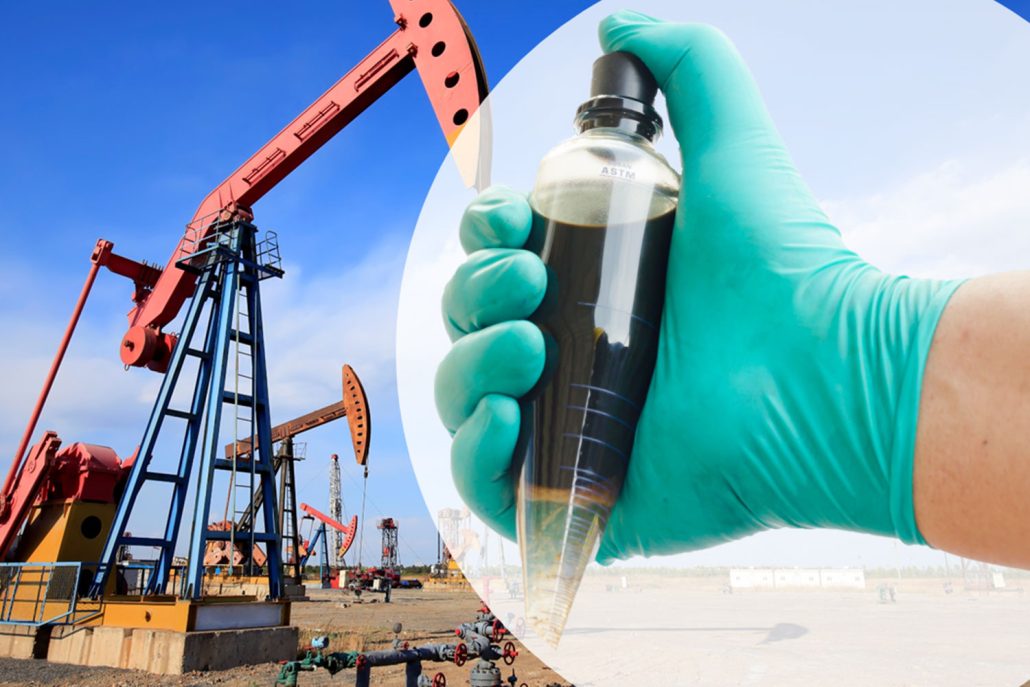
In the oil and gas industry, precision is profit. Yet, for decades, one of the most critical measurements in the field—the determination of water cut, or Basic Sediment and Water (BS&W)—has relied on a process that is notoriously cumbersome, labor-intensive, and fraught with potential for error.
For example, the Alberta Energy Regulator (AER) Directive 017 (updated December 2024) outlines the rigorous requirements for manual sampling and analysis. While these regulations ensure a standard of quality, they also highlight just how difficult it is to get an accurate reading using traditional methods.
The Maze of Manual Sampling: A Recipe for Error
According to Section 14.8 of Directive 017, obtaining a valid S&W measurement is far from a “plug and play” task. The manual process is a multi-stage marathon that introduces risk at every turn:
- The Challenge of Representative Sampling
The directive notes that sampling must be “representative of the entire volume transaction.” Achieving this requires precise placement of sampling points—often requiring the installation of in-line mixers, specific piping elements like elbows or reducers, or even taking multiple samples from different locations just to find a consistent spot. If the stream isn’t perfectly mixed, the “grab sample” is nothing more than a guess.
- Regulatory Rigidity
The requirements change based on the water cut percentage. If the water cut is below 10%, a spot/grab sample might suffice. If it’s higher, you are forced into continuous proportional sampling. This adds layers of mechanical complexity and maintenance to an already burdened operation.
- The Laboratory Bottleneck
Once a sample is physically collected, the manual work has only just begun. Operators must choose between three different static analysis methods depending on the suspected water cut:
- 0–10%: Centrifuge or Karl Fischer method.
- 10–80%: Graduated cylinder method with centrifuging.
- 80–100%: Graduated cylinder without centrifuging.
Each of these steps—transporting the sample, heating it, centrifuging it, and manually reading levels—is an opportunity for human error. From temperature fluctuations to “misreading the meniscus” in a graduated cylinder, the margin for error is wide.

A Modern Solution: XSENS Non-Intrusive Water Cut Measurement
What if you could bypass the mixers, the chemicals, the centrifuges, and the manual labor entirely?
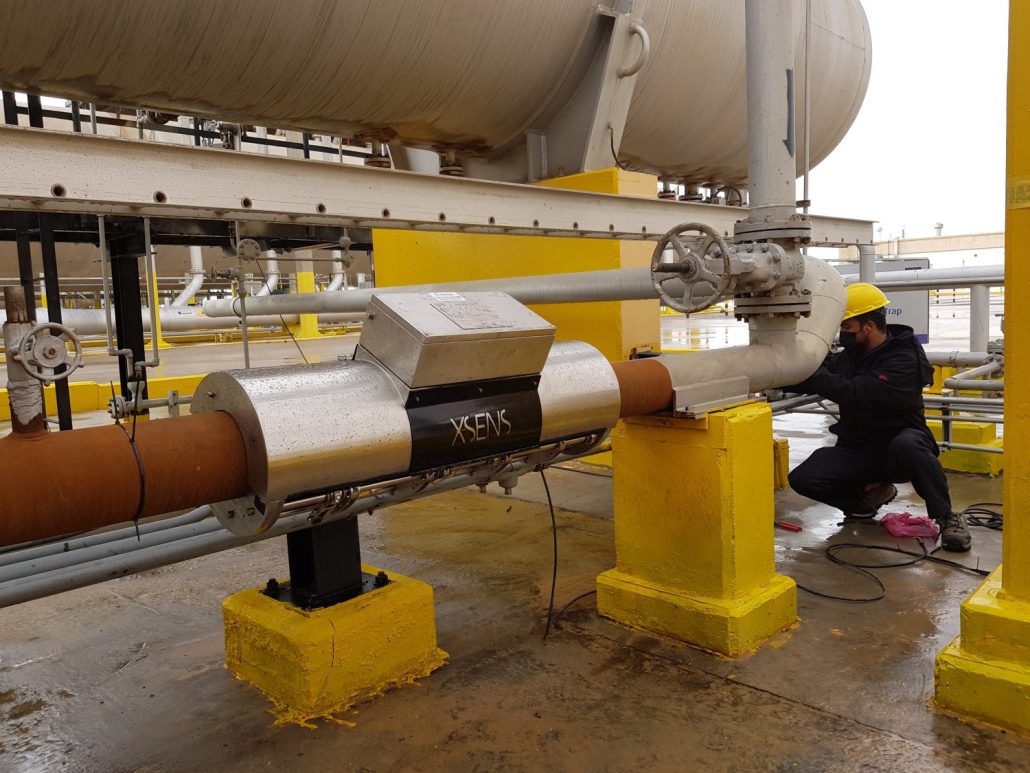
The XSENS Flow Solutions non-intrusive clamp-on water cut meter represents a paradigm shift in how the industry measures BS&W. Instead of the “extract and analyze” workflow mandated by traditional methods, XSENS offers a “clamp and measure” reality.
Precision Without the Headache
While manual methods struggle with consistency, the XSENS meter provides +/- 1% absolute accuracy across the entire 0-100% range. Whether you are dealing with a 2% water cut in a high-value pipeline or a 95% water cut in a late-life well, the accuracy remains unwavering.
Zero Process Interruption
Directive 017 lists extensive piping requirements to ensure a mixed stream for sampling. Because the XSENS meter is non-intrusive, there is no need to cut pipes, install mixers, or shut down production for installation. You simply clamp the meter to the outside of the existing pipe.
Live, Continuous Data
Manual sampling provides a “snapshot” in time—a single data point that may be outdated by the time the lab results return. XSENS provides live, continuous measurement. This allows operators to react in real-time to changes in well performance, protecting downstream equipment and optimizing separation processes instantly.
Conclusion: Digital Transformation of the Wellhead
The 2024 updates to Directive 017 make it clear: manual sampling is a complex, regulated burden. By moving away from the “grab and guess” mentality of the past and adopting non-intrusive, digital solutions like the XSENS Flow Solutions water cut meter, operators can eliminate the most common sources of measurement error.
Stop managing samples and start managing your data. With XSENS, you get better accuracy, lower operational costs, and the peace of mind that comes with a truly representative, continuous measurement.
Contact XSENS
Fill out our webform send us an email or call our Team to learn how the XSENS XACT Water Cut Meter can transform your BS&W measurement operations.

